
Calls answered 24/7(972) 284-7498
Garland TX Fire Restoration (972) 284-7498

Garland, Texas

Commercial Fire Damage Restoration in Garland, TX

Call (972) 284-7498

Our local fire restoration professionals clean soot from dining rooms, treat smoke residue in stockrooms and address wet flooring in Garland commercial buildings. Owners, managers and landlords can call now to describe the affected spaces and discuss the work across those surfaces.

  • Calls answered 24/7
  • Shops, offices, restaurants
  • Serving Garland and nearby
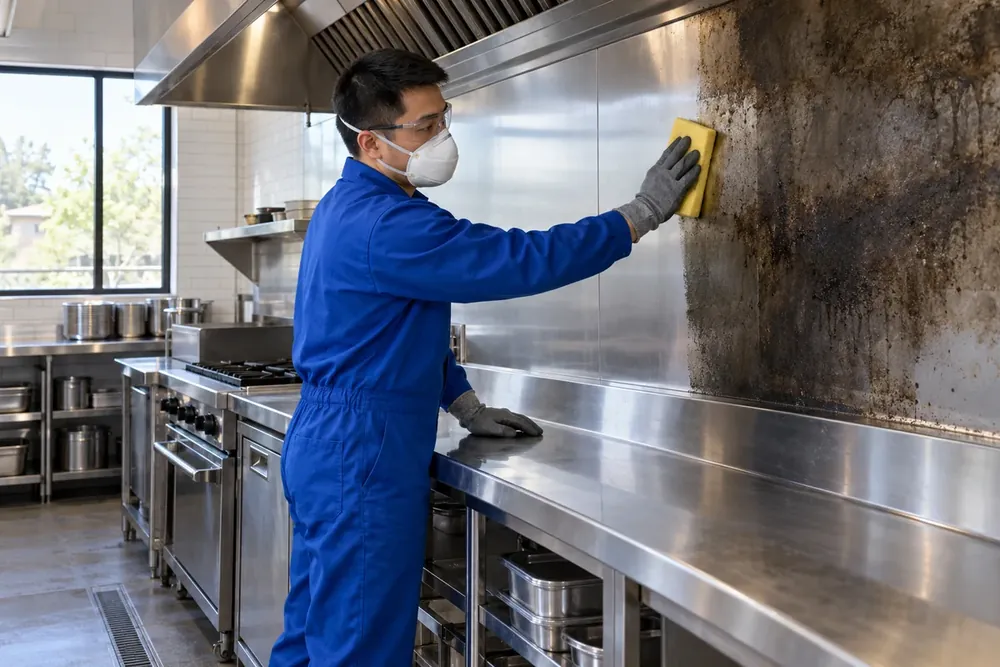
  • Masked technician in blue coveralls wiping soot from a restaurant's steel wall beside a long counter

Fire Cleanup for Garland Commercial Buildings

  • Restaurants and bars. Restaurant fire damage cleanup addresses greasy residue on room surfaces and furnishings; kitchen hood servicing is a separate trade.
  • Shops and strip centers. Fire damage restoration for businesses includes cleaning display areas, assessing wet flooring and separating smoke-affected stock.
  • Offices. Commercial smoke damage restoration addresses partitions, ceiling finishes, upholstered seating and contents exposed beyond the room where the fire started.
  • Warehouses and storage. Warehouse fire damage cleanup separates work on storage areas from the cleaning or replacement needs of stored goods.
  • Apartment buildings. Landlords can describe several affected units and shared corridors during one call about soot, smoke and firefighting water.
  • Schools and churches. Cleaning plans distinguish hard room surfaces from fabric seating, curtains and contents that may need treatment elsewhere.
  • Medical and dental offices. Room finishes and ordinary furnishings are assessed separately from specialist equipment, whose suitability for reuse needs separate attention.
  • Hotels and motels. Bedding, curtains, carpets and upholstered furniture need individual decisions because smoke and water can reach their inner layers.
  • Managed rental property. Fire damage restoration for property managers starts with the affected rooms and the materials needing cleaning, drying or replacement.

What Fire Touches in a Commercial Space

Business rooms hold stock, equipment and records as well as finishes and furnishings, adding more materials to assess. The cards begin with each usual outcome; scope and price are discussed on the call.

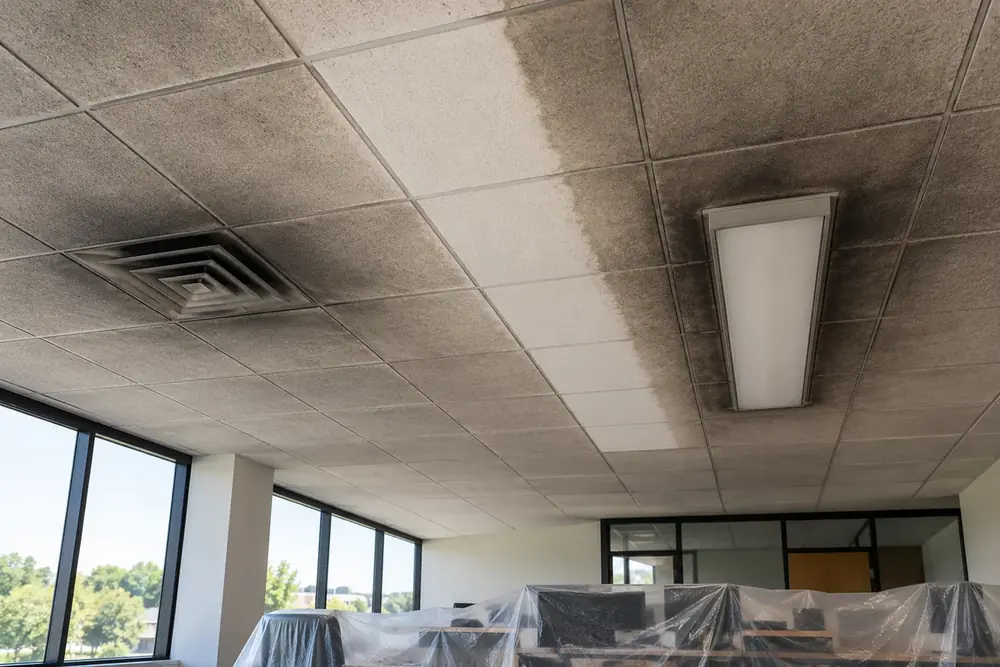
Open-plan office ceiling with one pale cleaned stripe beside soot-darkened tiles and desks under plastic
  • Walls, ceilings and finishes

    Intact commercial wall and ceiling finishes usually stay for surface cleaning, followed by drying where water reached them. Painted drywall, plaster and ceiling tiles require different handling depending on their finish and absorbency. Persistent residue within a sound surface may call for sealing before repainting. Charred sections, weakened drywall and affected insulation need removal and replacement instead of a cosmetic coat over the damage.

  • Floors and coverings

    Durable flooring is commonly cleaned in place when residue has not damaged the material beneath the surface. Tile and vinyl require different checks from wood, laminate and carpet, particularly where water collected at seams. Scorched coverings or odor retained in pad and subfloor layers may require lifting and replacement. Flooring kept in service is protected while ceilings, walls and other overhead surfaces receive attention.

  • Furniture, fabrics and uniforms

    Furniture fabrics, curtains, bedding and uniforms usually go through sorting for suitable textile cleaning. Some pieces can be laundered or dry-cleaned; others need specialist treatment off site because smoke entered cushions, lining or padding. A clean outer fabric does not settle the condition of the filling. Heat damage, dye stability and water exposure help determine whether treatment is reasonable or the item needs replacement.

  • HVAC, ducts and ventilation

    Vent covers and accessible surfaces are usually cleaned, while ducts and air-handling equipment receive a separate assessment. Smoke residue at a return can indicate that attention is needed beyond the visible grille. Your technician discusses duct cleaning, affected filters and components requiring specialist checks. Managers and tenants should leave the system closed and unused; cleaning a cover alone does not establish that the system is ready to operate.

  • Equipment, stock and records

    Recoverable stock and ordinary contents are typically separated for cleaning where they sit or packed for specialist treatment elsewhere. Heat-warped equipment, wet paper and absorbent packaging may need different decisions from washable hard goods. Computers and other electronics need specialist assessment before anyone powers them. Smoke-exposed business records are treated as contents; the condition of the paper and binding determines what handling or recovery is practical.

Residue and Water Reach Beyond the Burned Room

What you seeWhat it usually points toWhat to do
Greasy residue across dining surfacesSmoke carried oily particles beyond the kitchen.Describe the rooms from a safe location.
Smoke-darkened stockroom shelvesGoods and packaging may also hold residue.Mention the kinds of stock during the call.
Wet floors or stained ceilingsFirefighting water reached several material layers.Report what is already known; keep staff clear.
Soot around shared ventilation grillesConnected spaces need assessment alongside visible surfaces.Tell your technician which units share the area.
  • Adhered kitchen residue. Commercial soot removal considers greasy deposits differently from loose surface particles; finishes determine the cleaning approach.
  • Smoky fabrics. Chairs, curtains and carpet backing may retain residue after nearby hard surfaces have been cleaned.
  • Wet storage. Boxes can absorb water at floor level while goods above them remain affected mainly by smoke.
  • Office contents. Exposed paper and electronics need separate handling from desks, shelving and other washable furniture.

Call with those observations now; a complete inventory is unnecessary to start the conversation.

Securing, Phased Cleaning and Whole-Building Restoration

The building's condition and the separation between affected areas determine whether securing, phased cleaning or work throughout the premises fits.

OptionWhen it fitsWhat it involves
Secure the building and waitOpenings need protection while the cleaning plan is developed.Openings are boarded and roof openings covered, with cleaning still to follow.
Clean in phasesAreas can be separated from the damaged rooms.Work is divided by area. Garland's Fire Repair page says that before a space is reoccupied, the Building Inspection Department's pre-fire inspection comes first and the Code Compliance Department has the final say on when the structure is ready for habitation.
Close and restore room by roomSmoke, soot or water affects connected rooms throughout the building.Cleaning, drying and replacement proceed across the affected spaces while the building remains closed.

Your technician assesses the premises and explains which option suits the conditions found.

How a Commercial Restoration Job Takes Shape

  1. Describe the premises. Call with the building type, affected rooms, known water use and whether the business is currently open.
  2. Discuss the materials. Your restoration contact takes the details about finishes, furniture and stock, then outlines the next steps.
  3. Set the scope. The Red Cross's guidance for homes says to wait outside a fire-damaged home until local fire authorities say re-entry is safe. Your technician examines the building after the fire department permits access and explains each part of the work and its price before starting.
  4. Finish by area. Cleaning, drying and agreed repairs end with a walk-through; dated photos taken before cleaning and a written damage list remain for the owner's own records.

Damage Photos and Lists for the Owner

Dated photos taken before cleaning and a written list of what was damaged are handy to keep for the owner's own records.

  • Dated photos. Keep photographs taken before cleaning, without asking staff or tenants to enter restricted areas to obtain them.
  • Room finishes. The written damage list can name affected walls, ceilings, flooring and fixed finishes in the relevant rooms.
  • Furnishings and textiles. Include damaged seating, curtains, bedding or uniforms on that same written list where they were affected.
  • Stock and equipment. Add damaged goods, office equipment and paper contents to the owner's written list of what was damaged.

What Changes Commercial Fire Restoration Costs in Garland

What changesWhy it moves the scope
Rooms and connected areasResidue across shared corridors or several units adds surfaces and materials to assess.
Greasy or dry sootThe residue and finish determine suitable cleaning methods and how much treatment is needed.
Water in floors and ceilingsWet layers can add drying, opening of finishes and replacement to the job.
Contents and ventilationStock handling, equipment assessment and duct cleaning extend work beyond visible room surfaces.

One of our local fire restoration partners discusses the scope and price with the building owner before starting, using the material and access factors behind the cost.

Why Building Managers Call About Fire Damage

  • Calls answered 24/7. Managers can describe a fire-affected property whenever they call, including known damage to rooms, contents and shared spaces.
  • A local contact. A commercial fire restoration company handles the building assessment, with your technician discussing the actual materials and conditions found.
  • Work made clear. The conversation separates cleaning, drying and replacement so the owner understands the proposed scope and price before work starts.
  • The owner's records. Dated photos taken before cleaning and a written list of damaged items are handy for the owner's own records.
  • Garland and nearby communities. Owners and landlords can use the same number for commercial properties around Garland and nearby cities.

Keep People Clear Until the Building Is Released

The Red Cross's guidance for homes says to stay outside fire-damaged homes until local fire authorities say re-entry is safe. Garland's Fire Repair page says the Building Inspection Department's 'pre-fire inspection' determines required repairs before the space can be reoccupied, and the Code Compliance Department has the final say on when the structure is ready for habitation. Keep staff and tenants outside restricted rooms and marked areas. Call from a safe place and describe the damage already known, without sending anyone in to inspect stock or retrieve equipment.

Utility decisions belong to the fire department and utility personnel; managers should not switch or reconnect services. Leave burned and wet material undisturbed for assessment. Avoid handling soot-covered finishes or powering affected electronics, and do not attempt ordinary vacuuming or wiping of soot. Keep a written list of what was damaged for the owner's own records; the list need not be complete when you call.

Household Fire Cleanup Through the Same Number

Owners, managers and staff around Garland can use this number for smoke, soot and firefighting water at home; the home service pages follow below.

Commercial Fire Cleanup Across the Garland Area

Commercial owners, landlords and property managers around Garland and neighboring cities can call about damage to building finishes, furnishings, stock and equipment.

Commercial Fire Damage Restoration FAQs

Can I arrange commercial fire damage restoration near my Garland business through this number?

Yes, this number handles commercial fire damage as well as household fire cleanup around Garland. Describe the building's use and the rooms touched by smoke, soot or water. Owners and managers can start the conversation with those details, without sorting every piece of damaged stock or furniture first.

Which kinds of commercial premises does the service cover?

The service covers restaurants, shops, offices, warehouses, apartment buildings and other commercial premises. Cleaning decisions depend on the contents and finishes within each building rather than its label alone. A restaurant's greasy wall residue, an office's ceiling tiles and a warehouse's wet boxed stock call for different treatment.

What should a manager do first once the fire is out?

Call from a safe location and tell your restoration contact the building type and what damage has already been reported. Staff and tenants should remain outside restricted areas. No further inspection is needed to make the call; describe only the damage already known.

Can cleaning proceed while another part of the premises stays open?

Phased cleaning depends on whether affected areas can be separated. Your restoration contact cannot authorize reuse of any part. According to Garland's Fire Repair page, the Building Inspection Department must conduct a 'pre-fire inspection' that determines required repairs before the space can be reoccupied. The Code Compliance Department has the final say on when the structure is ready for habitation. Your technician assesses whether a phased plan fits.

What damage records are useful for a commercial owner?

Dated photos taken before cleaning and a written list of what was damaged are handy for the owner's own records. The list can include affected room finishes, furniture, stock and equipment. No one needs to enter a restricted space for photographs, and incomplete records do not prevent a call.

What determines the cost for a fire-affected business property?

The affected area, residue type, water spread and contents handling determine the work involved. Greasy deposits on hard surfaces differ from smoke retained in textiles or wet layers beneath flooring. Duct assessment, access between rooms and the amount of stock needing treatment also influence the scope your technician explains.

Restaurant owners, shop owners, landlords and property managers: call now about the walls, floors and contents the fire touched around Garland.

Call (972) 284-7498
Call (972) 284-7498