
How the Work Progresses
- The fire damage restoration process starts with assessing affected materials and securing damaged openings once the building is cleared for access.
- Debris removal, drying and soot cleaning follow the condition of walls, floors, fabrics, ducts and belongings.
- Repairs and the return of recoverable contents follow checks that the planned cleaning and drying work is complete.
From the First Call to Returning Belongings
A fire restoration job moves from understanding the damage to cleaning recoverable materials, replacing damaged layers and returning belongings. Call about the rooms involved, smoke beyond the burn area and any firefighting water. One of our local fire restoration partners will outline the proposed work and discuss its price before the job begins.
Safe access and securing openings
Fire damage restoration guidelines begin with the fire department's decision about safe access, and any rooms it marks remain off limits. A call can start while the building remains closed.
Damaged windows or doors may need board-up, and roof openings may need a temporary cover. Your technician assesses those needs as part of securing the building. Owners should leave that work to the people handling it. Children, pets and anyone with breathing trouble should stay away from the affected rooms.
A walk-through identifies the affected layers
Fire damage restoration steps follow what the inspection finds in each room. Your technician checks walls and ceilings, floor layers, fabrics, ventilation surfaces and belongings. In a kitchen, the inspection may focus on cabinet fronts and ceiling paint; in a bedroom, carpet, curtains and closet contents need attention. The inspection separates surface deposits from heat damage and water beneath finishes.
Loose dry soot, sticky deposits and charred material need different handling. Do not wipe soot dry, vacuum it or touch soot-covered surfaces with bare hands. Food or drinks that sat near heat or smoke should stay unused, consistent with post-fire food guidance. Where entry is allowed, doorway photos dated and taken before cleaning, along with a written list of damaged items, can be kept for your own records.
Walls and ceilings: clean sound finishes, remove damaged layers
Sound wall and ceiling finishes are generally assessed for cleaning where they sit. Your technician tests how the paint or other finish responds before treating a larger area. Dry particles and greasy film require different approaches, and textured surfaces can hold residue in recesses.
Burned drywall, wet insulation and broken ceiling sections may need removal. Accessible cavities are checked for moisture and dried as needed. Recoverable surfaces receive soot removal and odor treatment; sealing or new finishes follow the necessary cleaning. Closing a wall comes after the condition behind it has been addressed.
Floors and carpet: expose water before rebuilding
Sound tile and other durable flooring often stay in place for cleaning when the layers beneath are unaffected. Firefighting water changes the plan if it reaches joints, carpet pad or the subfloor. Debris and unsalvageable wet layers are removed so the remaining structure can be assessed and dried.
Carpet may receive specialist cleaning when its fibers, backing and pad are recoverable. Scorching, damaged backing or affected underlayers can require removal. Replacement flooring follows the drying work rather than concealing moisture below a new surface.
Soft goods and clothing: separate cleaning from the room
Recoverable clothing and removable fabrics are sorted for cleaning suited to their fibers and dyes. Garments may be packed out so cleaning can happen separately from wall and floor work. Upholstered furniture receives attention to the cover and filling, because odor can remain inside padding.
Cleaning takes away residue before odor treatment addresses what remains. Delicate textiles, scorched fabric and deeply affected cushions each need an individual decision about treatment or replacement. The smoke damage restoration process includes those belongings as well as the visible room surfaces.
HVAC and ducts: assess before treating
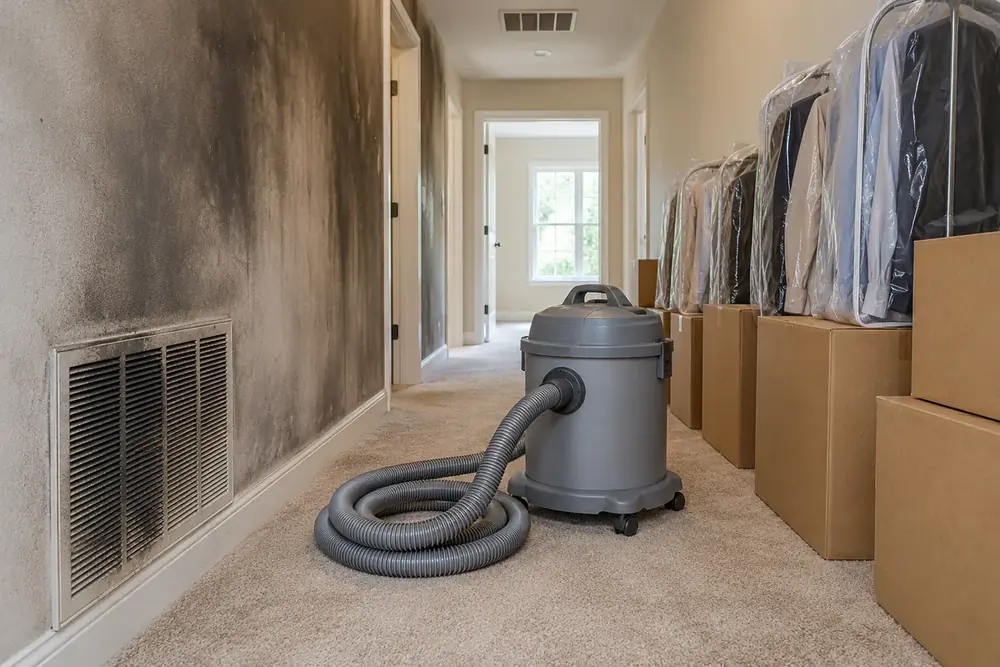
Sound accessible metal ventilation surfaces may be cleaned after inspection. Filters, porous lining and components exposed to heat need separate assessment. The inspection considers whether smoke reached the system and whether deposits extend beyond a register. Leave affected mechanical parts, wiring and controls untouched; specialists handle the necessary assessment and work.
Electronics and contents: sort, move and return
Durable hard belongings often start with surface cleaning, while electronics need specialist evaluation before any attempt to use them. Paper, unfinished wood and items with internal spaces require methods suited to the material. Heat distortion can make an item unsuitable for continued use.
Recoverable contents may be packed out while the room is treated and repaired. Cleaned items return after the surrounding finishes and floor are ready, so they are not placed back among remaining debris or soot.
Repairs and the final walk-through
Repairs restore the layers and finishes that cleaning could not save. The final walk-through checks the agreed work, visible finishes, remaining odor concerns and the condition of returned belongings.
| Stage | What happens | What the owner does |
|---|---|---|
| First call | Known rooms and damage are discussed | Share what happened without disturbing materials |
| Access and protection | Openings are assessed for boards or a temporary roof cover | Respect the access limits already given |
| Material assessment | Walls, floors, fabrics, ducts and contents are checked | Mention smoke or water noticed beyond the burn area |
| Removal and drying | Damaged debris is removed and recoverable wet layers are dried | Leave affected layers undisturbed |
| Cleaning and treatment | Surfaces and recoverable belongings receive suitable treatment | Discuss items needing special attention |
| Repair and return | Damaged finishes are replaced and cleaned belongings return | Review completed work and raise remaining concerns |