
What Shapes the Scope
- Fire damage restoration cost depends on which materials the fire touched and whether cleaning, drying or replacement is needed.
- Porous finishes, greasy deposits and water beneath flooring add work beyond removing loose soot from sound surfaces.
- An inspection establishes the scope because a surface stain cannot show the condition of every layer behind it.
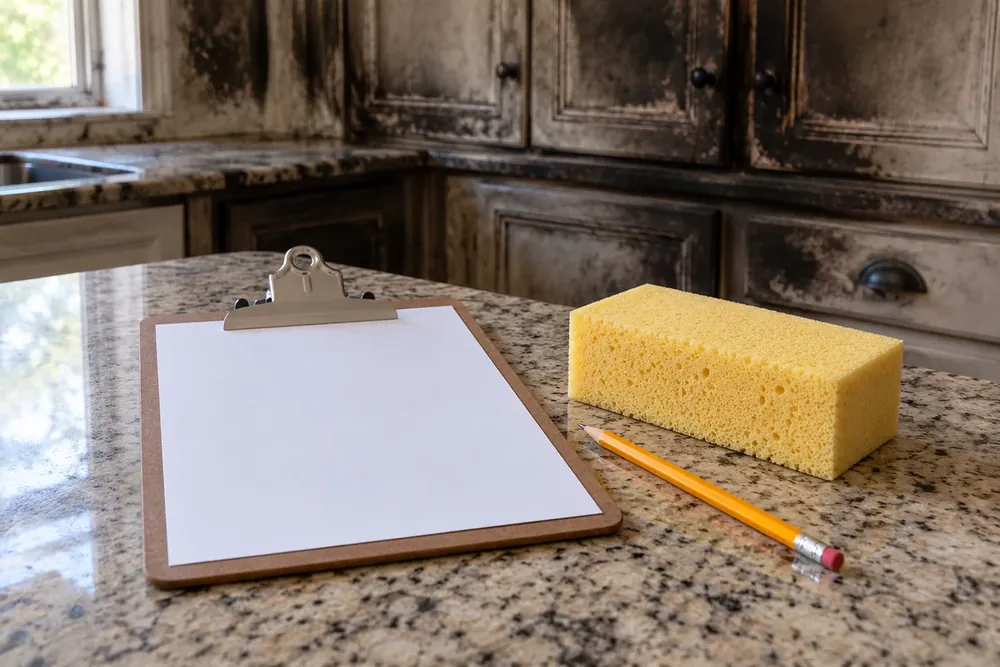
Materials and Their Condition Set the Work
The work grows when heat, residue or water reaches beneath a material's exposed surface. A washable finish with surface soot presents a different job from charred framing behind wet drywall. The amount of visible blackening alone cannot establish the price.
Walls and ceilings: cleaning or replacement
Sound painted walls often begin with a cleaning test to see whether the finish releases the residue. Dry soot needs controlled removal; rubbing can spread it across the paint. Greasy soot clings more firmly and can require repeated treatment. Time spent on testing and cleaning changes the scope.
Heat-blistered paint, softened drywall and wet ceiling insulation need separate decisions. Damaged layers may require removal, drying behind them and replacement. Sealing a sound surface may follow cleaning when staining remains; sealing does not replace removing the residue. Access above cabinets or across a high ceiling also affects the work.
Floors and carpet: the layers underneath
Hard flooring may be cleaned in place when its finish and underlying layers remain sound. Soot along joints, scorched boards or water beneath a floating floor can extend the work beyond the visible marks. Your technician checks whether moisture has reached the subfloor.
Carpet needs attention to the pile, backing and pad. Surface cleaning may suit recoverable fibers, while heat damage or deeply affected padding can require replacement. Moving furniture, lifting layers and drying the base add separate tasks.
Soft goods and clothing: fabric and filling
Washable clothing and removable fabrics are often candidates for separate cleaning after sorting and testing. Fiber type, dye stability and the length of smoke exposure affect the method. Keeping washable garments separate from heavily affected upholstery avoids treating everything as the same material.
Cushions and padded furniture hold residue below the cover. Repeated odor treatment or moving items out for cleaning adds handling. Scorched fibers, altered texture or persistent contamination can make replacement the more practical outcome.
HVAC and ducts: access and construction
Accessible metal registers and sound metal duct surfaces may be cleaned after assessment. Lined ducts, filters and heat-damaged components need individual decisions because porous interiors behave differently from bare metal. Openings, duct length and access points affect how much work is involved. Mechanical and electrical assessment belongs to the appropriate specialists; owners should leave affected equipment untouched.
Electronics and contents: surface versus internal damage
Hard, nonporous belongings often receive surface cleaning when heat has not changed their shape or finish. Wood furniture, paper and electronics require separate sorting. Soot around a device's openings raises a different issue from soot on a glass vase.
Electronics need specialist evaluation for internal residue and heat exposure. Do not test affected devices yourself. Packing, transport and cleaning of recoverable items add handling, while damaged internal parts can change the decision to replacement.
A material check keeps the scope specific
Each material adds work according to its condition and the layers affected.
| What was touched | What moves the price | What usually keeps it simple |
|---|---|---|
| Walls and ceilings | Greasy residue, damaged finishes, wet cavities | Intact washable paint with accessible surface deposits |
| Floors and carpet | Wet underlayers, damaged pad, scorched boards | Sound flooring with residue confined to the surface |
| Soft goods and clothing | Deep odor, delicate fibers, moving items out | Washable fabrics that respond to a cleaning test |
| HVAC and ducts | Porous lining, heat damage, difficult access | Accessible sound metal surfaces |
| Electronics and contents | Internal deposits, heat effects, separate handling | Durable items with external residue only |
House fire debris removal cost changes with the material removed, its quantity and the route needed to carry it out. Water-heavy carpet and broken wall layers create different handling needs from a small amount of dry debris.
Call with the damage you already know about
Call now and describe the rooms touched, where smoke traveled and whether firefighting water was used. One of our local fire restoration partners will relate those details to the work, then review the price with you before it starts. A page cannot give an honest building-specific total without an inspection of the materials and hidden layers.
Leave affected materials undisturbed
The fire department decides when the building is safe to enter; wait for its permission and stay out of rooms it has marked. Do not dry-wipe or vacuum soot, or touch affected surfaces with bare hands. Keep children, pets and people with breathing trouble away from the affected area. Leave food and drinks exposed to heat or smoke unused, following food safety advice after a fire. For your own records, a written list of damaged items and dated photos from the doorway taken before cleaning can be useful once access is permitted.