
Damage Extends Beyond Scorch Marks
- Kitchen fire damage can include greasy soot, scorched finishes, smoke in nearby rooms and water or extinguisher residue.
- Cleaning may save intact walls, cabinets and hard contents, while charred wood, distorted flooring and damaged appliance parts need separate repair decisions.
- A small burned area still warrants checking where smoke traveled and which materials absorbed residue.
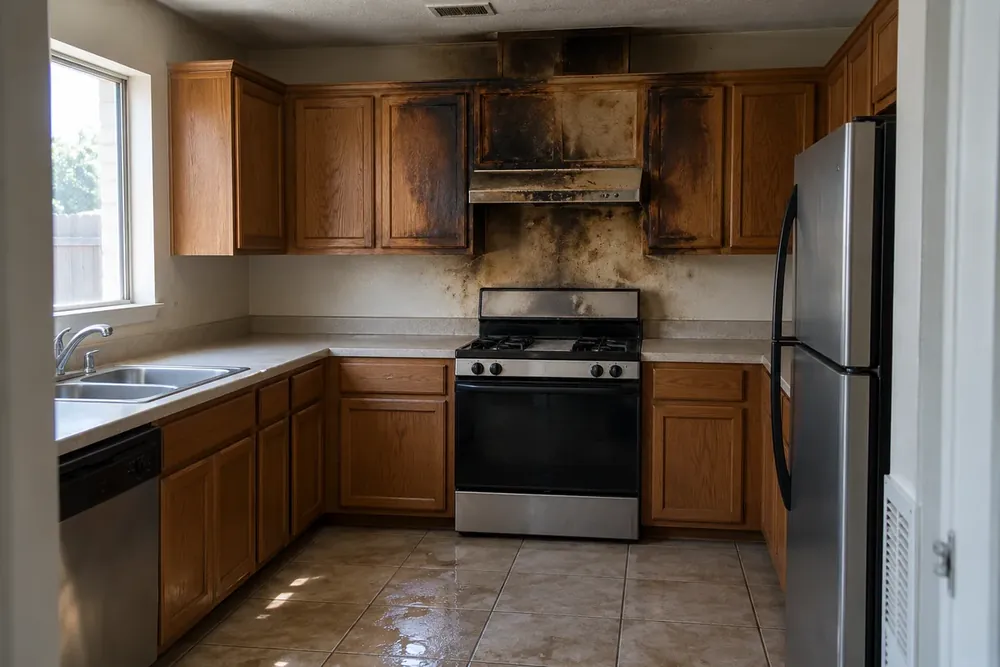
Kitchen Cleanup Follows Heat, Residue and Water
Kitchen fire damage services address soot, heat damage, odor and any water or extinguisher residue left after the flames are out. The burned area alone does not establish the scope. A stove fire can mark the cabinet above it while smoke settles farther away on ceilings, textiles and belongings.
According to the U.S. Fire Administration, cooking is the leading cause of home fires. That national finding does not establish what caused an individual kitchen fire or how much of a particular house needs work.
Walls and ceilings
Intact painted walls and ceilings usually need testing and cleaning to remove the residue sitting on their finish. Cooking fires often leave a greasy film that clings around the range hood and upper walls. Smoke can spread beyond the darkest patch, so your technician checks the ceiling and adjacent rooms rather than drawing a boundary around the stove.
Blistered paint, softened drywall and heat-damaged backing need assessment for replacement. Suitable sealing may follow cleaning on sound surfaces with remaining odor; a fresh finish alone does not remove greasy residue underneath.
Cabinets and countertops
Sound cabinet surfaces may be cleaned, while charred wood, warped doors and peeling layers often need replacement. Your technician considers the cabinet box, doors, underside and interior separately. A cleanable outer face does not establish that the hidden joint above the stove survived the heat.
Countertops also need a material-specific decision. A smooth, intact surface may respond to cleaning, whereas cracks, scorching or separated layers can call for replacement. Kitchen fire damage repair should distinguish cosmetic residue from damage to the material itself.
Floors and carpet
Intact tile and other compatible hard flooring can often be cleaned in place, with attention to grout and joints. Water from hoses may sit beneath cabinets or reach seams, so a floor assessment includes moisture as well as soot.
Carpet near the kitchen may need specialist cleaning, while deeply affected pad may have to be removed. Swelling wood and flooring that has buckled or separated need a different decision from an unwarped hard surface. Drying and cleaning address different parts of the damage.
Soft goods and clothing
Curtains, cushions and nearby clothing are usually assessed for specialist cleaning based on fabric, heat exposure and how deeply smoke reached them. Soft materials can hold odor even when there is little visible staining. Delicate textiles may go out for cleaning rather than being treated in the kitchen.
Heat-weakened fibers and contaminated furniture filling may not recover through surface treatment. A material-by-material inspection keeps an apparently small fire from becoming a reason to overlook belongings farther from the stove.
HVAC and ducts
Affected ventilation components need inspection, followed by cleaning or replacement according to their construction. Metal surfaces and porous lining do not hold smoke residue in the same way. Vent deposits, odors in separate rooms and the path smoke took help your technician decide which parts need attention.
Leave operation of the system and utility decisions to the appropriate professionals. Running equipment to see whether the smell clears can move residue before affected components have been assessed.
Electronics, appliances and other contents
Heat- or soot-affected electronics and appliances need specialist assessment, while intact dishes and other suitable hard belongings may be cleaned. An appliance's outer casing does not show the condition of internal components. Do not clean wiring or test affected appliances yourself.
Food and drinks that sat near heat or smoke should not be consumed. Discard food exposed to a kitchen fire; heat can spoil food in cans or jars and damage the containers. Fumes can reach food inside refrigerators because the seals are not airtight.
The material decides the work
A cleaning plan separates residue that can be removed from heat or water damage that requires another treatment.
| What the fire touched | What usually has to happen | Why |
|---|---|---|
| Sound walls and ceilings | Test the finish, remove soot and assess remaining odor | Greasy residue can remain beyond the visible patch |
| Cabinet doors and boxes | Clean intact parts; replace charred or distorted sections | Heat changes wood and joined layers |
| Floors and carpet pad | Clean salvageable surfaces and assess drying or replacement | Water and residue may reach hidden layers |
| Curtains and upholstery | Arrange fabric-specific cleaning or selective replacement | Smoke can penetrate fibers and filling |
| Ducts and electronic contents | Arrange specialist assessment | Internal residue may be inaccessible to ordinary surface cleaning |
A small fire can need a wider inspection
Small kitchen fire damage can still require checking the rest of the house when smoke moved through doorways or affected ventilation. Odor in a bedroom, deposits near a vent or soot on dining room fabrics gives your technician a reason to assess those materials. Extinguisher residue also needs identification so the cleaning method matches what was discharged.
Kitchen fire damage cost depends on the affected materials, the depth of cleaning and which parts need repair or replacement. One of our local fire restoration partners will go over those decisions and the price before work starts. When choosing a kitchen fire damage company, a written scope that separates cleaning from replacement makes the proposed work easier to understand.
Safe steps while arranging cleanup
If you are deciding what to do if you have a kitchen fire that is still burning, leave the building and call the fire department. For the aftermath, stay out of the fire-damaged home until local fire authorities say re-entry is safe; any rooms they have restricted remain off limits.
Call about kitchen fire damage in Garland without waiting to inspect the house yourself. Do not dry-wipe or vacuum soot, touch it with bare hands, or handle affected wiring. Keep children, pets and anyone with breathing trouble away from residue. If access is permitted, dated doorway photos taken before cleaning and a written list of damaged materials may be kept for your own records.