
Match Method to Material
- Restoration professionals remove loose soot with suitable HEPA equipment and dry cleaning sponges selected for the residue and surface.
- Greasy deposits may require controlled wet cleaning after loose residue is removed and the finish has been tested.
- Porous or heat-damaged materials sometimes need sealing or replacement when cleaning cannot remove the embedded residue.
Soot Cleaning Depends on Residue and Finish
What is soot removal?
Soot removal lifts combustion residue from surfaces without pushing it deeper into the material. Soot contains fine particles left by incomplete burning, often mixed with oily residue. Unlike ordinary dust, it can stain finishes and cling to pores. Heat damage and water used to put out the fire also affect what a surface will tolerate.
Powdery and greasy soot behave differently
Dry soot commonly follows fast, hot burning, while slower, cooler burning and cooking fires can leave sticky or greasy deposits. A single room may contain both. Your technician tests the residue and finish together because a method that lifts loose particles may smear an oily film.
Dry-wiping with a household cloth can drag residue across paint or work it into texture. A household vacuum can redistribute fine particles through inadequate filtration, while a brush attachment can grind soot into fabric. Leave soot undisturbed rather than trying a small patch yourself.
Painted walls and textured ceilings
Soot removal from walls usually begins with careful removal of loose residue, followed by cleaning suited to the paint finish. Glossy, intact paint may tolerate a different treatment from flat paint or exposed wallboard. Blistering, softened drywall and charred material require repair decisions beyond surface cleaning.
Textured ceilings are harder because residue settles between raised areas and the finish may break under pressure. Your technician assesses whether cleaning will preserve the texture or whether affected material needs removal and replacement. Sealing is considered only after appropriate cleaning and evaluation of the remaining surface.
Brick, mortar and grout
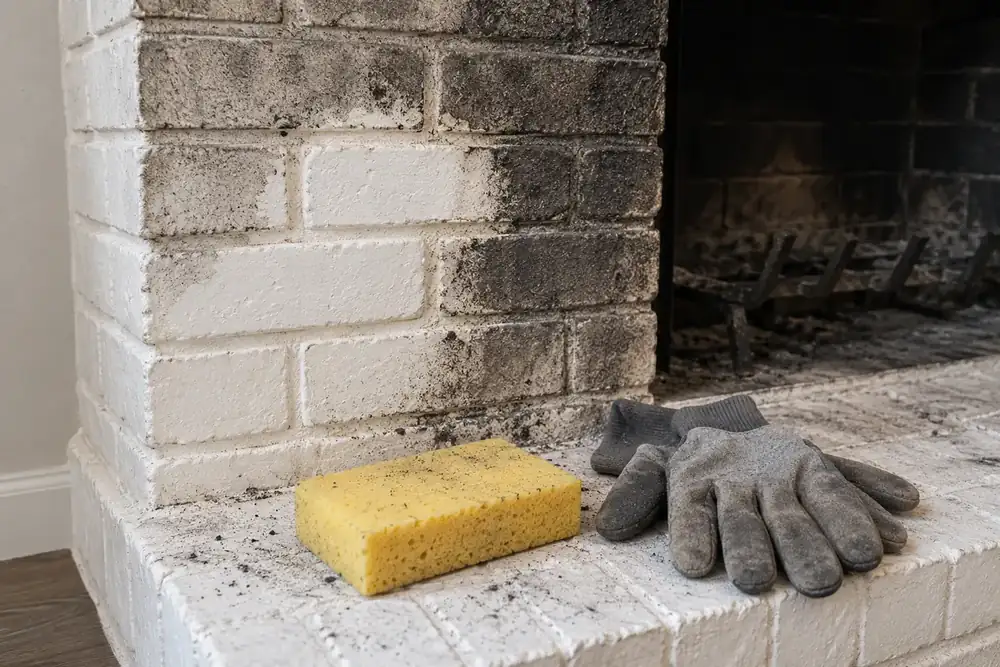
Soot removal from brick depends on whether the brick is sealed or painted and how deeply residue entered its pores. Unsealed brick and mortar have irregular openings that hold fine particles. A surface may look lighter after cleaning while soot remains below the face.
Grout presents a similar problem between smooth tiles. Treatment must account for the porous joint as well as the tile finish. Stronger scrubbing is not automatically a better answer: it can damage a coating or spread residue across neighboring material. Heat cracks and damaged mortar need separate assessment.
Professional tools and the order of work
Professional cleaning usually starts with controlled removal of loose deposits before any suitable wet cleaning is considered. HEPA vacuums capture fine particles, and dry chemical sponges lift appropriate dry residue without adding water. Rinsing can drive soot deeper into belongings.
What dissolves soot depends on the oily residue mixed with the particles and the surface underneath. There is no single household liquid suited to every deposit. After the dry stage, your technician may test controlled wet cleaning on a compatible hard finish. That professional sequence is not an instruction to wash affected surfaces yourself.
Surfaces need different outcomes
The most useful answer to what to use to clean smoke damage is a material-specific method chosen after testing.
| Surface | What soot does there | What usually works |
|---|---|---|
| Intact painted walls | Rests on the finish or stains through it | Loose-residue removal, tested cleaning and suitable sealing if needed |
| Unsealed brick and mortar | Collects in pores and uneven joints | Controlled specialist cleaning with assessment of remaining staining |
| Tile and grout | Coats tile and penetrates porous joints | Separate treatment of the smooth face and grout |
| Carpet and upholstery | Settles between fibers and into filling | Specialist cleaning or replacement of deeply affected layers |
| Glass and sound hard contents | Coats exposed faces, edges and recesses | Finish-compatible cleaning after loose deposits are removed |
Floors, fabrics, ducts and contents
Intact hard floors are often cleaned in place, while carpet and soft goods need assessment of the layers beneath the visible fibers. A wet pad or heat-weakened fabric may need replacement even if its soot can be reduced. Clothing and curtains may be moved out for specialist cleaning matched to the fabric.
Affected metal ducts may be cleaned, but contaminated porous lining may need replacement. Equipment and electronic belongings need specialist attention rather than wiping around openings. Leave wiring, appliances and system operation to the appropriate professionals.
Debris decisions and the next step
The receiving waste facility decides what soot-contaminated debris it accepts, and the restoration professional arranging removal checks the requirements for each material. Do not assume burned building debris belongs in an ordinary household bin. No particular disposal destination is recommended here.
Wondering what takes off soot is enough reason to call; you do not need to test cleaners first. One of our local fire restoration partners will discuss the proposed cleaning, any replacement work and the price before the job begins.
Keeping people away from soot
The fire department decides when a fire-damaged home is safe to access. Rooms the department has restricted remain off limits.
Do not wipe soot dry, vacuum it or touch it with bare hands. Keep children, pets and anyone with breathing trouble clear of affected areas. Food or drinks left near heat or smoke should not be consumed. Where entry has been permitted, dated photos from the doorway before cleaning and a written damage list are useful for the owner's own records.