
Odor Starts With Residue
- Removing smoke odor starts with locating and removing burned debris and other materials that keep releasing the smell.
- Your technician cleans salvageable surfaces and fabrics, then determines whether remaining porous materials need treatment, sealing or replacement.
- Professional air treatment supports source removal, while candles and scented sprays leave smoke residue in the house.
Smoke Odor Treatment Follows the Materials
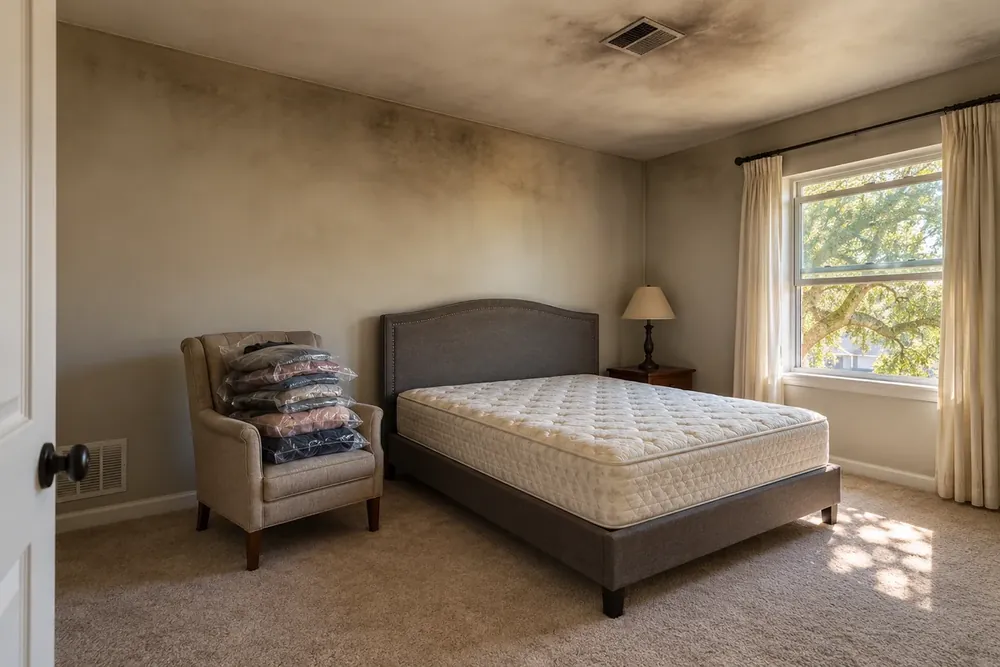
Smoke odor removal depends on removing the residue trapped in building materials and belongings. Smoke carries particles and gases beyond the room where flames burned, so a clean-looking bedroom may still hold odor in its carpet, curtains or closet contents. How long smoke sat, whether heat damaged a surface and whether water soaked it all affect the cleaning plan.
Walls, ceilings and insulation
Sound drywall is usually assessed for surface cleaning first; damaged sections and contaminated insulation may need replacement. A painted wall and the insulation behind it respond differently because one has an exposed finish and the other has a deep, porous structure. Your technician checks whether residue is confined to the face or has reached cavities.
Sealing may help contain lingering odor in suitable, cleaned building surfaces. Paint over unremoved soot does not replace cleaning, and a coating cannot repair crumbling drywall or charred framing. The decision follows the material's condition after residue removal, rather than whether a stain can be hidden.
Carpet, pad and hard floors
Salvageable carpet may receive specialist cleaning, but deeply affected pad may need removal. Odor can remain below the fibers even when the carpet surface looks better. Water used during firefighting adds a drying decision, especially where pad and subfloor remain damp.
Tile and other intact hard finishes are often cleaned where they sit. Grout, floor joints and exposed wood need closer attention because residue can settle into openings. Heat distortion or layers that have separated may make replacement more practical than repeated treatment.
Fabrics, clothing and upholstered furniture
Washable textiles usually need cleaning matched to the fabric, while delicate clothing and furnishings may go out for specialist treatment. Cushions and mattresses are harder to assess than a thin curtain because smoke can reach filling that surface cleaning misses. Heat-weakened fibers or persistent odor after suitable cleaning can change the decision to replacement.
Keep affected clothing separate from clean belongings rather than moving loose, sooty fabrics throughout the house. Your technician can explain which items need packing for cleaning and which should remain undisturbed.
HVAC, ducts and contents
Affected ventilation components need professional assessment, with cleaning or replacement based on the material and the extent of residue. Metal duct surfaces differ from porous duct lining. A lingering smell near a vent does not identify the source by itself; surrounding ceiling material and nearby furnishings may also hold residue. Leave system operation and electrical decisions to the appropriate professionals.
Hard, intact belongings may be cleaned, while books, unfinished wood and padded items need individual decisions. Electronics require specialist assessment rather than household cleaning. The inspection includes contents because untreated belongings can bring odor back into a cleaned room.
Matching the odor source to treatment
Effective odor work reaches the material holding the residue, rather than simply changing how the room smells.
| Where the smell sits | What usually has to happen | What does not work |
|---|---|---|
| Sound painted drywall | Remove residue, then assess remaining odor and suitable sealing | Painting over soot |
| Insulation or carpet pad | Assess depth of contamination and replace affected material when needed | Cleaning only the visible surface |
| Curtains and clothing | Clean according to fabric and finish | Scented sprays |
| Duct lining or upholstered filling | Assess whether cleaning reaches the affected layer | Treating room air alone |
| Salvageable hard contents | Clean surfaces, seams and accessible recesses | Bowls of vinegar elsewhere in the room |
Clean air and returning smells
Clean air supports odor removal after the sources are addressed. Candles, sprays and bowls of vinegar do not remove smoke embedded in walls or furniture. Professional air filtration and appropriate odor treatment complement material cleaning; they do not make damaged pad or contaminated insulation clean.
Ozone generators are not for occupied spaces: the U.S. Environmental Protection Agency says no federal agency has approved them for that use. The same EPA page explains that, at concentrations that do not exceed public health standards, ozone is not effective at removing many odor-causing chemicals.
A returning smell can mean an overlooked layer, an untreated item or residue in a cavity is still releasing odor. Changes in warmth or humidity can make that remaining source more noticeable. Describe where and when the smell returns so your technician can reassess the affected materials.
Calling while keeping clear of residue
Call now to discuss how to remove smoke smells from the house without disturbing the affected rooms. One of our local fire restoration partners will outline the proposed treatment and its price before work begins.
The fire department decides when anyone may return, as the American Red Cross advises; stay out of rooms it has restricted. Do not dry-wipe or vacuum soot, or touch sooty surfaces with bare hands. Keep children, pets and people with breathing trouble away. Do not eat or drink anything that sat near smoke or heat. If entry has been allowed, dated doorway photos taken before cleaning and a written list of damaged items can be kept for your own records.